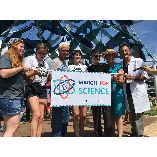
David Hastings, Retired Eckerd College Professor, is a marine scientist and professor with more than 30 years of experience in oceanography, marine chemistry, and climate science. He has built a career spanning academic research, teaching, and
...
public engagement focused on understanding ocean systems and environmental change. He holds a Bachelor of Science in Chemistry, cum laude, from an Ivy League university and earned both a Master of Science and a PhD in Oceanography from a major public research university, completing his doctorate in 1994 with dissertation recognition for excellence in scientific research.
Dr. Hastings completed his undergraduate studies in chemistry at an Ivy League institution, graduating with honors and demonstrating strong academic achievement in the physical sciences. He later pursued graduate studies in oceanography at a major public research university, where he completed both a master’s and a doctoral degree. During his academic training, he focused on marine chemistry and environmental geochemistry, developing expertise in ocean processes and interactions with the climate system that would later support his long-term scientific research career.
Professor Hastings began his professional career in environmental geochemistry at a national research laboratory before moving into academic research and teaching roles at a major Pacific Northwest university. He served as a graduate research and teaching assistant, contributing to oceanographic studies and scientific instruction. He later worked in an advanced oceanography position analyzing environmental data and marine systems. These early roles provided extensive experience in oceanographic research methods, data interpretation, and marine chemistry applications, shaping his future academic trajectory.
David Hastings, PHD, completed a postdoctoral appointment at a Canadian university, where he served as a research associate in earth and ocean sciences, expanding his work in marine geochemistry and climate-related research. He later held visiting research roles at a major urban university in the United States, contributing to interdisciplinary earth science studies. In addition, he served as a scholar-in-residence focused on climate solutions in Seattle in 2013. These experiences broadened his collaborative research across oceanography, climate science, and environmental systems.
Dr. Hastings joined a coastal liberal arts college in Florida in 2000 and advanced from assistant professor to associate professor, then to full professor, in marine science and chemistry. He also served as department chair and participated in academic committees focused on curriculum development, environmental affairs, and institutional assessment. His work supported marine science education and interdisciplinary programs linking chemistry, oceanography, and environmental studies. Through teaching and leadership, he contributed to student learning and academic program development over nearly two decades.
Professor Hastings conducts research in marine geochemistry, chemical oceanography, paleoceanography, and climate science, with additional work on microplastics in marine environments. His research includes studies of ocean processes and environmental change, as well as applied analysis of a major offshore oil spill in the Gulf of Mexico. He has authored more than 40 peer-reviewed publications, combining fieldwork and laboratory analysis to understand ocean chemistry and climate interactions across modern and historical systems. His work contributes to a broader understanding of marine environmental change.
David Hastings, Retired Eckerd College Professor, has secured more than $1.5 million in research funding through approximately 30 grants supporting scientific and educational initiatives. He has received multiple awards recognizing teaching excellence, scholarly achievement, and climate science communication from academic and professional organizations. His service includes participation on advisory boards, convening scientific conference sessions, and delivering more than 50 invited lectures on oceanography and climate science. He has also contributed to mentoring programs supported by national science agencies and engaged in environmental policy discussions with government representatives. Beyond his professional work, he maintains an active outdoor lifestyle in Florida.